 LaunchDomainsNews from
IANA switches the DNS root to its new KSK-2024 signing key
Since October 11, 2026, the DNS root zone is signed with KSK-2024 (key tag 38696). Domain owners need not act; DNSSEC-validating resolvers must trust the new key.
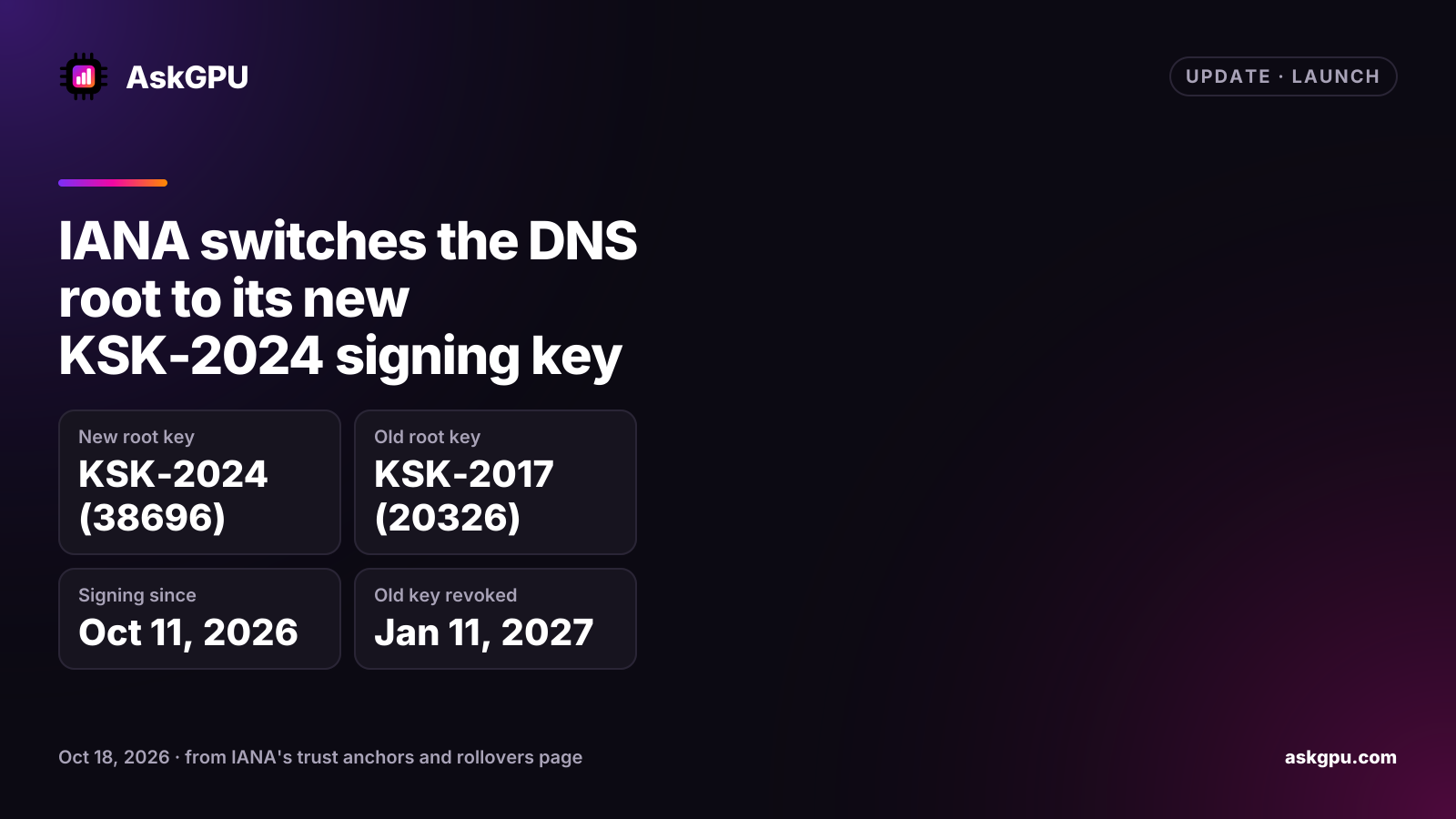
On October 11, 2026, the DNS root zone switched to a new key-signing key. IANA’s trust anchor page lists KSK-2024, key tag 38696, as the active key signing the root from that date. The previous key, KSK-2017 (tag 20326), had signed the root since October 11, 2018 and is now in post-publication.
The rollover timeline
| Step | Date |
|---|---|
| KSK-2024 published in the root zone | January 11, 2025 |
| Automatically updating resolvers can trust KSK-2024 | February 10, 2025 |
| KSK-2024 starts signing; KSK-2017 stops | October 11, 2026 |
| KSK-2017 revoked | January 11, 2027 |
| KSK-2017 removed | March 22, 2027 |
IANA’s page says validating resolvers must have updated trust anchors to keep validating the root zone.
Who needs to do something
Domain owners: nothing. Namecheap’s guide says owning domains, or turning on DNSSEC for them at your registrar, does not put you on the hook. That is the publishing side of DNSSEC, and it keeps working as before.
Resolver operators: check the trust anchor. The work falls on whoever runs a recursive resolver that validates DNSSEC, such as an office appliance, a campus resolver, or Unbound or BIND on a server. A resolver that never picked up key tag 38696 fails validation for signed domains, so many sites look unreachable even though nothing is wrong with them. Namecheap’s checklist: confirm 38696 is in the trust anchor file, confirm automatic updates are on, and make sure the resolver can write to that file. Resolvers restored from old snapshots or images are the most likely to be missing it.
If you use your internet provider’s resolver or a public resolver, keeping the key current is that provider’s job.
What to do
If people on your network report that many unrelated sites stopped loading since October 11 while those sites work elsewhere, check your own resolver’s trust anchor first. Turning off DNSSEC validation hides the symptom but drops the protection, so fix the anchor instead.
Sources
Read on . Prices are in US dollars. How we check facts